Exploring Python Frameworks for Web Development
12/27/2025
Common Python Errors and How to Fix Them
12/27/2025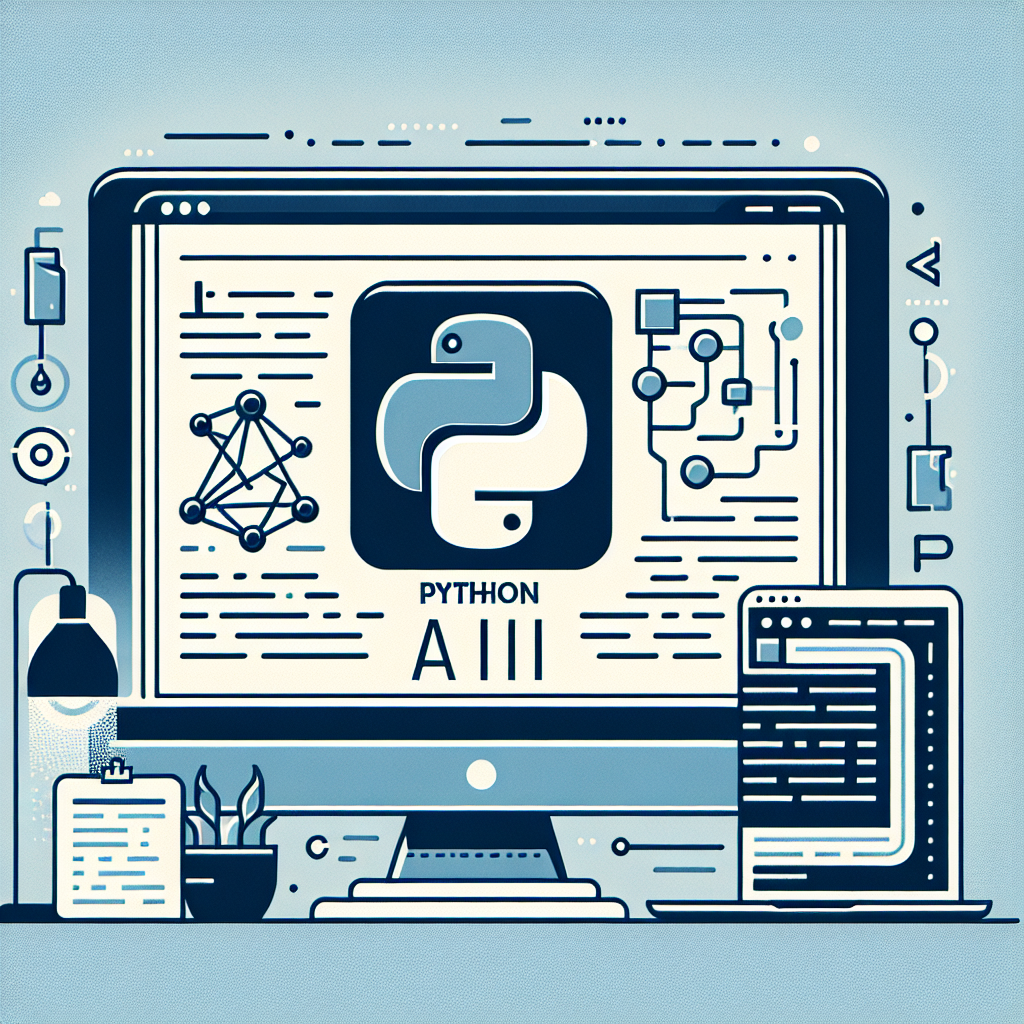
How to Get Started with Python for AI
Introduction
Python has become one of the most popular programming languages for artificial intelligence (AI) and machine learning (ML). Its simplicity, readability, and extensive libraries make it an ideal choice for both beginners and experienced developers. Whether you are a student looking to get into AI or a professional aiming to enhance your skills, this guide will provide you with the foundational knowledge needed to start your journey with Python for AI.
Understanding the Basics of Python
Before diving into AI, it is crucial to have a solid understanding of Python programming. Here are some fundamental concepts you need to grasp:
- Data types (strings, integers, floats, lists, dictionaries)
- Control structures (if statements, loops)
- Functions and modules
- Object-oriented programming (classes and objects)
Learning Resources
To master these basics, consider using the following resources:
- Online courses (Coursera, edX, Udacity)
- Interactive platforms (Codecademy, LeetCode)
- Books (Automate the Boring Stuff with Python, Python Crash Course)
Setting Up Your Python Environment
To get started with Python, you need to set up your development environment. Here’s how:
- Install Python from the official website.
- Choose an Integrated Development Environment (IDE) such as PyCharm, Jupyter Notebook, or Visual Studio Code.
- Install essential libraries using pip, such as NumPy, Pandas, and Matplotlib.
Diving into AI with Python Libraries
Python’s strength lies in its vast ecosystem of libraries tailored for AI and ML. Here are the key libraries you should familiarize yourself with:
- NumPy: For numerical computations.
- Pandas: For data manipulation and analysis.
- Matplotlib: For data visualization.
- Scikit-learn: For traditional machine learning algorithms.
- TensorFlow and PyTorch: For deep learning applications.
Practical Example: A Simple Machine Learning Model
To put your knowledge into practice, consider building a simple machine learning model. Start by:
- Loading a dataset using Pandas.
- Preprocessing the data (cleaning and normalizing).
- Choosing a model from Scikit-learn, such as a linear regression.
- Training the model with your dataset.
- Evaluating its performance using metrics like accuracy or mean squared error.
Common Mistakes to Avoid
While learning Python for AI, it’s easy to make mistakes. Here are some common pitfalls:
- Neglecting to understand the data before analysis.
- Overfitting models by making them too complex.
- Ignoring errors and warnings in your code.
- Failing to document your code and processes.
Benefits of Learning Python for AI
Mastering Python for AI offers numerous advantages:
- High demand for Python skills in the job market.
- Access to a supportive community and abundant resources.
- Ability to work on diverse AI projects, from image recognition to natural language processing.
Conclusion
Getting started with Python for AI is an exciting journey that combines creativity with technical skills. By mastering the basics of Python, setting up a suitable environment, and delving into essential libraries, you will be well on your way to building AI applications. Remember to avoid common mistakes, leverage available resources, and continuously practice your skills. With persistence and dedication, you can become proficient in Python and contribute to the evolving field of artificial intelligence.